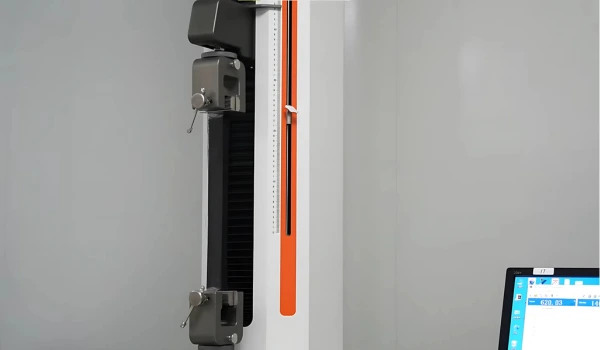
In the world of textile engineering, a fabric’s “strength” is its ultimate defense against the physical stresses of the real world. Whether it is the pressure of a child’s knee on a playground, the tension on a parachute cord during a high-altitude descent, or the weight of gear in a hiking backpack, the structural integrity of textiles is often a matter of both product quality and consumer safety. To quantify these limits, modern engineers use a fabric strength tester, also known as a universal testing machine (UTM). These machines, alongside specialized units like the fabric bursting strength tester, provide the empirical data necessary to ensure that a material is fit for its intended purpose, whether for high-fashion, industrial use, or life-critical medical applications.
Tensile Strength: The Power of One-Way Stress
The most common application of a fabric strength tester is the tensile test. This involves clamping a precisely cut strip of fabric at both ends and pulling it at a constant speed until it reaches its rupture point. The machine measures two primary metrics: the “breaking force” (the maximum load the fabric can sustain) and the “elongation” (the percentage the fabric stretches before breaking). These metrics are essential for determining the durability of woven fabrics, where the strength of the warp and weft yarns must be perfectly balanced to prevent skewing or tearing during garment assembly or consumer wear.
ChiuVention’s SmartPull is a high-precision fabric strength tester that utilizes AC servo motors and high-resolution ball screws to provide a steady, constant rate of extension (CRE). This is critical because jerky or inconsistent pulling in older mechanical machines can lead to false readings and “premature failure” data. The SmartPull is capable of performing a wide range of tests beyond simple pulling, including tearing resistance, peeling force (essential for laminated fabrics), and seam slippage tests. By meeting international standards like ISO 13934 and ASTM D5034, it ensures that the data generated is globally recognized, facilitating smoother trade between regional suppliers and international luxury buyers who demand documented proof of durability.
Multidirection Strength and Bursting Resistance
While a standard tensile test measures strength in a single linear direction, many textiles experience pressure from all sides simultaneously during use. This is where the fabric bursting strength tester becomes an indispensable part of the quality control lab. For knitted fabrics, non-wovens, and technical textiles like medical bandages or automotive interior fabrics, a standard tensile test is often inappropriate because the material would simply deform or “neck” rather than break in a measurable way.
The fabric bursting strength tester, such as the HydroBurst, uses a hydraulic diaphragm to apply uniform pressure perpendicular to the fabric surface. The fabric expands into a dome shape until it eventually bursts. The machine records the “bursting pressure” and the “bursting height.” By using high-precision laser sensors from Panasonic, the HydroBurst can measure this dome expansion without touching the sample, ensuring that the sensor itself doesn’t influence the material’s behavior. This multidimensional analysis is vital for products like high-compression activewear, industrial filter bags, and protective surgical gowns, where the material must resist “popping” or structural failure under intense, multi-directional pressure.
Digital Integration for a Safer Supply Chain
In a modern 2026 manufacturing environment, the data from a fabric strength tester or a fabric bursting strength tester is more than just a number on a screen—it is a permanent digital record of compliance and safety. Through the SmarTexLab ecosystem, every test result is automatically uploaded to a secure cloud server. This creates a transparent “quality certificate” that can be shared instantly with brand owners, auditors, and retail partners across the globe.
If a batch of fabric fails a strength test, the system can flag the issue before the material is even cut and sewn, preventing the creation of thousands of defective garments and drastically reducing industrial waste. Furthermore, the smart software within these machines can generate detailed stress-strain curves, allowing textile engineers to analyze the “elastic modulus” or stiffness of the fabric. This level of detail is essential for developing high-performance textiles that need a very specific balance of strength and flexibility. By investing in a connected fabric strength tester, manufacturers are not just checking a box for quality; they are building a data-driven foundation for technical innovation and consumer safety that protects their reputation in a crowded marketplace.