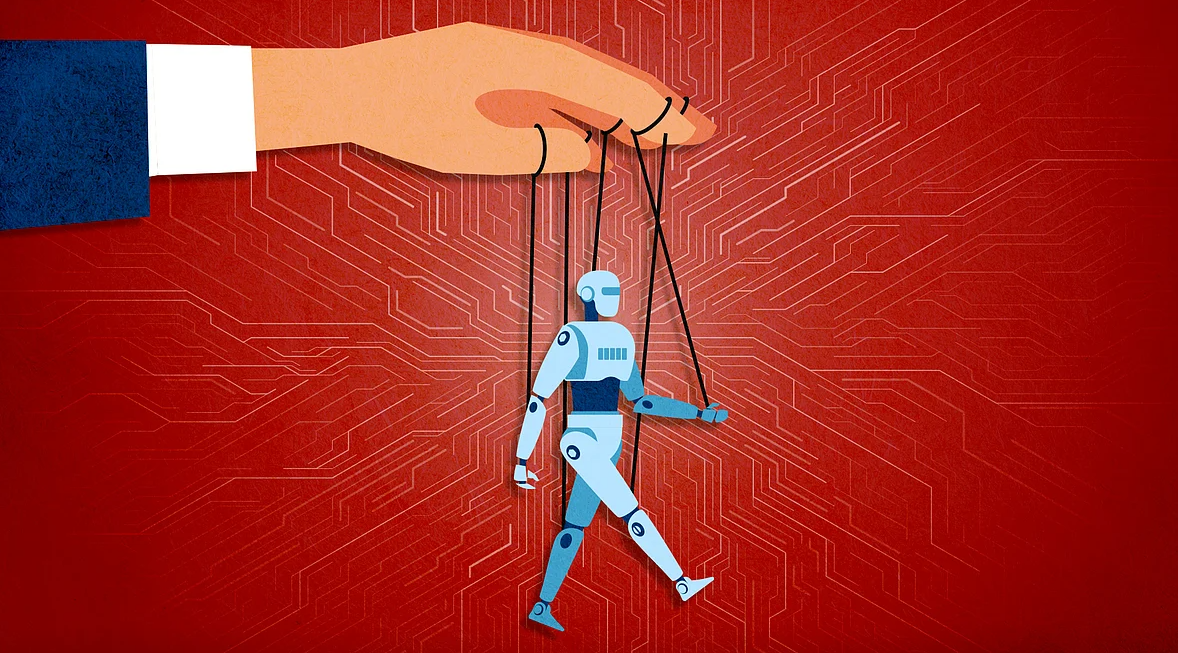
The website https://loka.co.id/ can be understood as part of a broader internet system that doesn’t just deliver information, but quietly normalizes how people behave online. Over time, platforms like this influence not only what users learn, but how they think about digital problems in the first place.
In this sense, Loka.co.id is less about content and more about shaping predictable patterns of action.
From Curiosity to Problem-Driven Searching
Earlier internet usage was often exploratory—people browsed websites out of curiosity. Today, behavior is increasingly problem-driven. Users only engage with content when something breaks, changes, or becomes confusing.
Loka.co.id exists entirely within this problem-driven model:
- A feature stops working → user searches
- A setting disappears → user searches
- An app update changes layout → user searches
- Confusion appears → user searches
The platform is designed to meet users at that exact moment of disruption.
The Internet as a Maintenance System
Rather than functioning as a space for exploration, the modern internet behaves like a maintenance system for digital life. Loka.co.id plays a role similar to a maintenance manual that is constantly updated and instantly accessible.
Within this system, content serves to:
- Repair user confusion
- Restore functionality understanding
- Translate system changes into actions
- Stabilize user experience after updates
This transforms the web into a continuous repair environment.
Behavioral Standardization Through Repeated Solutions
One subtle effect of platforms like Loka.co.id is behavioral standardization. When millions of users follow similar instructions for similar problems, behavior itself becomes uniform.
This includes:
- Identical troubleshooting steps across users
- Shared methods for solving app issues
- Repeated patterns of interaction with interfaces
- Converging habits in digital problem-solving
Over time, users begin to behave in predictable ways when facing digital issues.
The Rise of Instructional Minimalism
Loka.co.id operates within a framework of instructional minimalism—reducing explanations to only what is necessary for action.
This minimalism is expressed through:
- Short procedural steps
- Direct command-like instructions
- Removal of theoretical context
- Focus on immediate execution
The goal is not to educate deeply, but to restore functionality as quickly as possible.
Search Engines as Behavioral Filters
Search engines do more than retrieve information—they filter how users perceive problems and solutions. Loka.co.id aligns its content with these filters to ensure visibility.
This filtering process affects:
- Which problems appear “common”
- How issues are linguistically framed
- Which solutions feel authoritative
- How users interpret digital failures
In practice, search engines define what counts as a “real” problem worth solving.
The Compression of Digital Experience into Steps
A defining feature of Loka.co.id is the transformation of complex digital experiences into linear step-by-step instructions.
This compression process involves:
- Breaking interfaces into sequential actions
- Removing ambiguity from navigation
- Translating system logic into user steps
- Eliminating alternative methods of solving problems
While efficient, this reduces the richness of how systems are experienced.
The Dependency Loop of Instant Guidance
As platforms like Loka.co.id become more widely used, they create a dependency loop:
- Apps become more complex
- Users become more reliant on instructions
- Instructions simplify interaction
- Users engage less deeply with systems
- Complexity increases again
This loop ensures continuous demand for external guidance.
Mobile Interaction and the Decline of Deep Reading
Mobile devices reinforce shallow but frequent engagement patterns. Loka.co.id is optimized for this environment where users:
- Scan instead of reading
- Look for immediate solutions
- Avoid long explanations
- Prioritize speed over comprehension
This encourages a form of “instant literacy” where understanding is temporary and task-based.
The Industrial Logic of Digital Instruction
Behind platforms like Loka.co.id is an industrial logic: instruction becomes a repeatable product rather than a unique explanation.
This logic emphasizes:
- Scalability of content creation
- Reusability of article structures
- Efficiency in answering queries
- High-volume coverage of similar issues
Instruction becomes mass-produced rather than individually crafted.
The Hidden Homogenization of Digital Knowledge
As more platforms adopt similar SEO-driven structures, digital knowledge becomes increasingly homogenized. Different websites begin to describe problems in similar ways and offer nearly identical solutions.
This leads to:
- Reduced diversity in explanations
- Converging instructional styles
- Standardized phrasing across the web
- Predictable solution patterns
Loka.co.id participates in this broader homogenization process.
Loka.co.id as a Stabilizer of Digital Complexity
Despite its limitations, Loka.co.id performs an important stabilizing function. As digital systems grow more complex, users need fast ways to regain control and understanding.
The platform stabilizes experience by:
- Reducing confusion after updates
- Offering quick procedural clarity
- Bridging gaps between systems and users
- Restoring usability in real time
It acts as a friction-reduction layer in the digital ecosystem.
Conclusion
In conclusion, https://loka.co.id/ is not just a tutorial website but part of a larger system that shapes how people respond to digital complexity. It reflects a world where knowledge is increasingly standardized, search-driven, and behavior-oriented.
While this model reduces depth and diversity of understanding, it significantly increases speed, accessibility, and usability—making it a key component of how modern users navigate an ever-changing digital environment.